
Beyond Sci-Fi: Unlocking the TRUE Definition of a Smart Home (And Why Yours is Probably NOT One Yet!)
The term "smart home" has been buzzing around for years, conjuring images of voice-activated assistants, lights that dim on command, and refrigerators that order groceries. It’s a vision straight out of science fiction, now seemingly within our grasp. But what exactly defines a smart home? Is it simply a collection of connected gadgets, or is there a deeper, more transformative meaning?
Many believe they’ve achieved "smart home" status by installing a few smart bulbs and a voice assistant. While these are certainly components of a smart home, they often represent a superficial understanding of what truly constitutes a "smart" living space. This article will delve into the comprehensive definition of a smart home, dissecting its core principles, the technologies that power it, the benefits it offers, and the crucial distinction between a connected home and a truly intelligent, autonomous dwelling. Prepare to have your perception of "smart" challenged and perhaps discover why your current setup might be falling short of its full potential.
The Foundation: Connectivity is Key, But Not the Whole Story
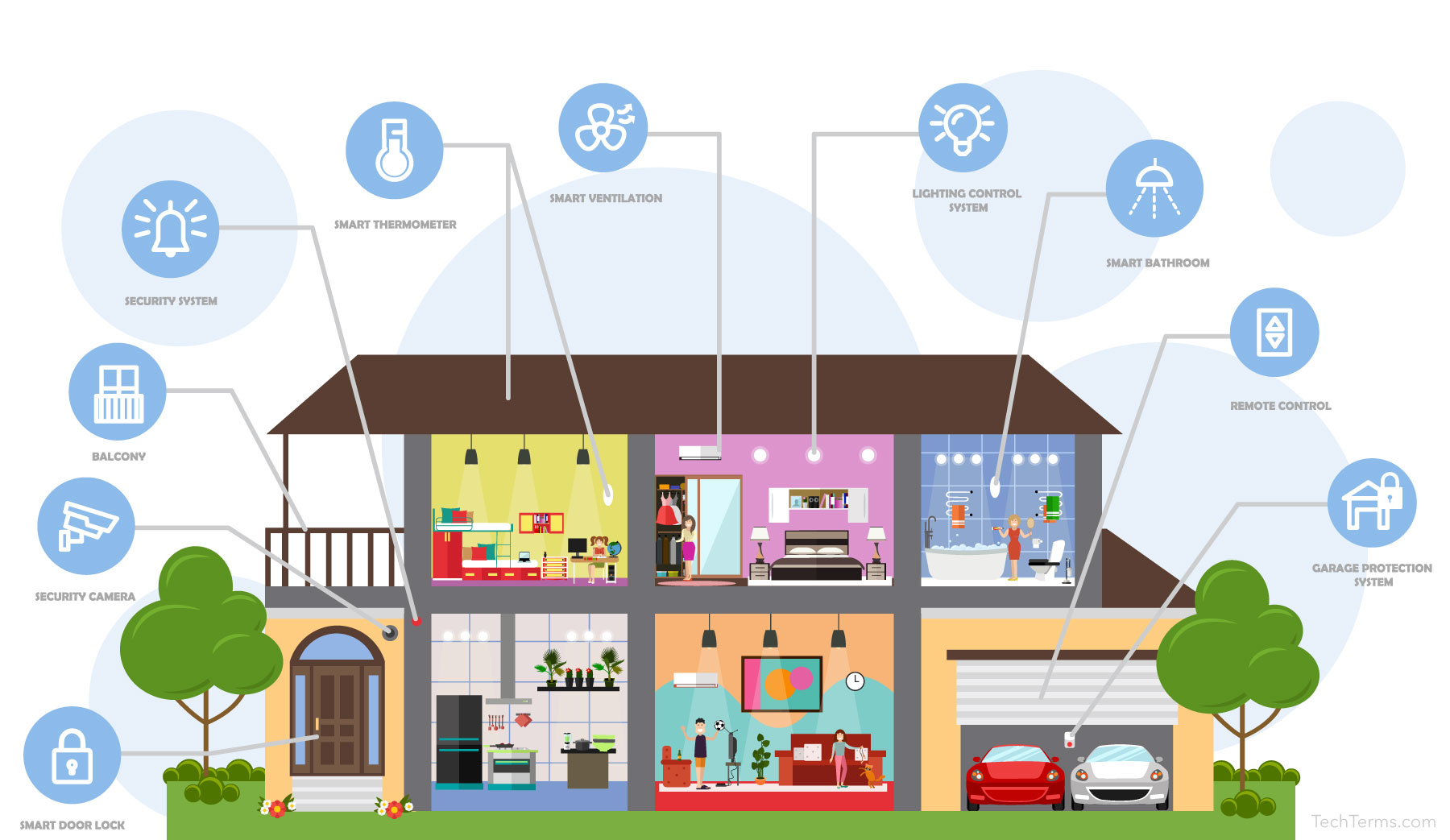
At its most basic, a smart home is a residence equipped with devices that can be controlled remotely and/or automated. This fundamental layer of connectivity is the bedrock upon which all smart home functionality is built. These devices, ranging from thermostats and lighting systems to security cameras and entertainment hubs, communicate with each other and with the user through a network, typically Wi-Fi or Bluetooth.
The ability to interact with these devices remotely, often through a smartphone app or voice commands, is what initially captured the public’s imagination. Imagine adjusting your thermostat from your office, checking your security feed while on vacation, or turning on your coffee maker before you even get out of bed. This level of convenience and control is undeniably appealing and forms the primary gateway for most people into the world of smart homes.
However, this remote control aspect, while significant, is only the first step. It’s akin to having a car with power windows – a nice feature, but it doesn’t fundamentally change the driving experience. The true "smartness" lies in what happens beyond simple remote activation.
The Evolution: From Connected to Intelligent
The true definition of a smart home transcends mere connectivity. It evolves into a living, breathing ecosystem that learns, adapts, and anticipates the needs of its inhabitants. This is where the distinction between a "connected home" and a "smart home" becomes critical.
A connected home is characterized by devices that can be individually controlled remotely. You can turn on a light, adjust the temperature, or lock a door. The intelligence resides primarily with the user, who must issue commands for each action.
A smart home, on the other hand, leverages the data gathered from its connected devices to make autonomous decisions and perform actions without explicit user intervention. This is achieved through sophisticated algorithms, artificial intelligence (AI), and machine learning (ML). The home doesn’t just respond to commands; it understands patterns, preferences, and context to proactively enhance comfort, security, and efficiency.
Key Pillars of a Truly Smart Home:
To understand the depth of a smart home’s capabilities, let’s explore its core pillars:
-
Automation and Routine Creation: This is where the intelligence truly shines. Instead of manually turning off lights, a smart home can learn your daily routine. It can detect when you leave a room and automatically switch off the lights, or when you’re about to arrive home and adjust the thermostat to your preferred temperature. Routines can be programmed for specific times or triggered by events, such as "Good Morning" routines that gradually raise blinds, turn on soft lighting, and start the coffee maker.
-
Interoperability and Seamless Integration: A truly smart home doesn’t have isolated smart devices. All the devices, regardless of brand or manufacturer, should be able to communicate and work together harmoniously. This means your smart security system can trigger your smart lights to turn on if a motion sensor is activated outside, or your smart blinds can adjust based on the sunlight detected by an external sensor, optimizing natural light and reducing reliance on artificial lighting. This interoperability is often facilitated by open standards and platforms that allow for seamless integration.
-
Learning and Adaptation: The "smart" in smart home comes from its ability to learn from your behavior and preferences over time. A smart thermostat, for example, won’t just stick to a programmed schedule. It will observe when you adjust the temperature manually and gradually refine its settings to better match your comfort levels. Similarly, a smart lighting system might learn which rooms you use most frequently at certain times of the day and adjust its brightness accordingly.
-
Contextual Awareness: A sophisticated smart home understands the context of its environment and its occupants. This can include factors like occupancy detection (knowing if someone is in a room), ambient light levels, outdoor weather conditions, and even the presence of specific individuals (through facial recognition or voice profiling). This awareness allows for more nuanced and personalized automation.
-
Proactive Problem Solving and Efficiency: Beyond convenience, smart homes are designed to optimize resource consumption. Smart thermostats can learn to reduce energy usage when the house is empty or when energy prices are high. Smart irrigation systems can adjust watering schedules based on real-time weather data, preventing overwatering and conserving water. Some systems can even detect potential issues, like water leaks or unusual energy spikes, and alert the homeowner.
-
Enhanced Security and Peace of Mind: Smart home security goes beyond basic alarm systems. Integrated systems can provide real-time alerts, remote monitoring, and even deterrents like simulated occupancy lighting. The ability to remotely access cameras, lock doors, and receive notifications about any unusual activity offers unparalleled peace of mind.
The Technologies Powering the Smart Home Revolution:
Several key technologies underpin the definition of a smart home:
-
Internet of Things (IoT): This is the overarching concept of physical objects embedded with sensors, software, and other technologies that enable them to collect and exchange data. Smart home devices are prime examples of IoT.
-
Wireless Communication Protocols: Wi-Fi, Bluetooth, Zigbee, and Z-Wave are essential for devices to connect to each other and to the internet. Each has its strengths and weaknesses, and a robust smart home ecosystem often utilizes a combination of these.
-
Artificial Intelligence (AI) and Machine Learning (ML): As mentioned, AI and ML are crucial for enabling smart homes to learn, adapt, and make intelligent decisions. They analyze data patterns to personalize experiences and optimize operations.
-
Cloud Computing: The cloud provides the processing power and storage needed for smart home systems to operate, manage data, and deliver remote access and updates.
-
Voice Assistants (e.g., Amazon Alexa, Google Assistant, Apple Siri): These act as intuitive interfaces, allowing users to control smart home devices through natural language commands. While they are a gateway, they are not the entirety of a smart home.
-
Sensors: Motion sensors, occupancy sensors, light sensors, temperature sensors, door/window sensors, and environmental sensors are the eyes and ears of a smart home, gathering critical data for automation and awareness.
Beyond the Hype: Real-World Benefits of a Smart Home
The implications of a truly smart home extend far beyond mere novelty. The benefits are tangible and can significantly improve quality of life:
-
Enhanced Convenience and Comfort: The ability to automate daily tasks and create personalized environments liberates occupants from mundane chores and ensures optimal comfort levels at all times.
-
Increased Energy Efficiency and Cost Savings: By intelligently managing energy consumption, smart homes can lead to substantial reductions in utility bills and a smaller environmental footprint.
-
Improved Security and Safety: Advanced security features provide peace of mind and can proactively prevent potential threats, while smart home safety features can alert occupants to dangers like fire or gas leaks.
-
Greater Accessibility for Individuals with Disabilities: Smart home technology can be a game-changer for individuals with mobility issues or other disabilities, allowing them to control their environment with greater ease and independence.
-
Increased Home Value: As smart home technology becomes more prevalent and sought after, a well-integrated and advanced smart home system can add significant value to a property.
The Future is Autonomous: The Next Frontier of Smart Homes
While many homes today can be described as "connected," the true definition of a smart home is continually evolving towards greater autonomy. The future will see homes that are not just reactive but proactive and predictive. Imagine a home that can anticipate your needs before you even articulate them, adjust its settings based on your mood, and seamlessly manage all its systems in perfect harmony.
This includes advanced AI that can learn your daily rhythm, predict when you’ll need certain appliances, and even suggest meal plans based on available ingredients and your dietary preferences. Security systems will become more sophisticated, capable of identifying potential threats and taking preventative measures autonomously. Energy management will be hyper-optimized, dynamically adjusting to grid demands and renewable energy availability.
Conclusion: Are You Living in a Truly Smart Home?
The definition of a smart home is not simply about having a few voice-controlled gadgets. It’s about creating an intelligent, interconnected ecosystem that learns, adapts, and anticipates the needs of its occupants to enhance comfort, security, and efficiency. It’s about a home that works for you, not just with you.
As technology continues its relentless march, the line between a connected home and a truly smart home will become increasingly blurred. The ultimate goal is a dwelling that seamlessly integrates technology to create a more intuitive, responsive, and ultimately, more human-centric living experience. So, as you consider your own living space, ask yourself: is it just connected, or is it truly smart? The answer might surprise you, and it could be the key to unlocking a future of effortless living.






Leave a Comment
You must be logged in to post a comment.